
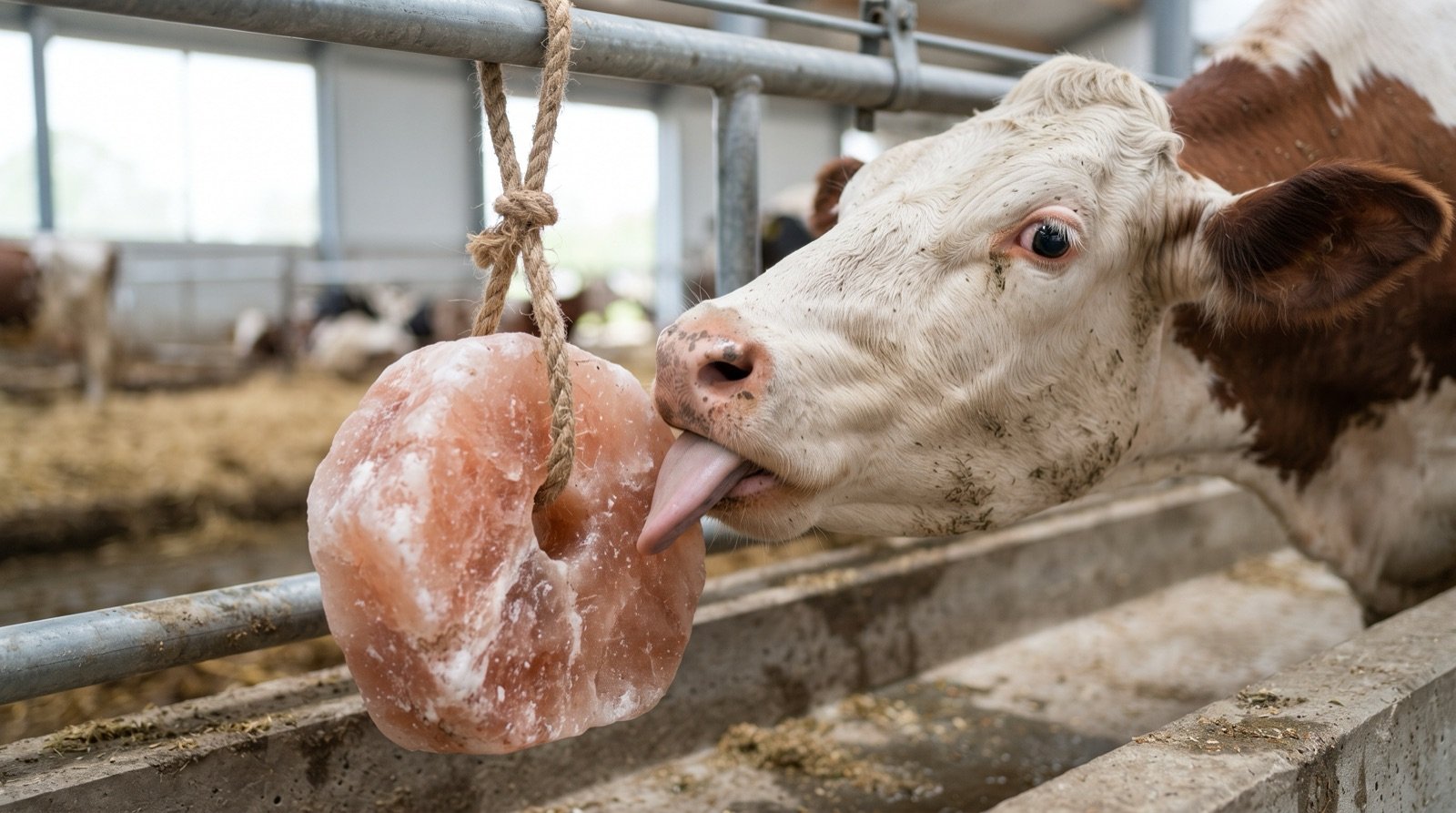
Animal licking pink salt is commonly used on dairy farms as a source of salt and sodium for cattle. It is supplied in the form of a solid salt block which animals can lick when it is provided as part of their feeding program.
Pink salt is a natural salt product and can be used as a convenient source of sodium and chloride for dairy cows and other livestock.
We at Al Wasi Global supply and export animal licking pink salt from Pakistan for dairy farms, livestock businesses, animal feed distributors, and other agricultural markets.
What Is Animal Licking Pink Salt?
Animal licking pink salt is a solid block made from salt and prepared for use by livestock. The natural pink colour of the salt can be associated with naturally occurring minerals in the salt. However, the exact mineral composition can vary according to the source of the salt.
Salt mainly provides sodium and chloride. These are essential minerals for animals and form an important part of livestock nutrition. Animal licking salt is not a complete feed. It is normally offered as a supplement alongside the animal’s regular diet.
Can Dairy Cows Use Pink Salt?
Yes, dairy cows can be provided with animal licking pink salt as a source of salt. Dairy cows require sodium and chloride as part of their diet. Providing salt in block form is one way of making salt available to animals.
The amount of salt required can vary between animals. It depends on factors such as:
- Cow size
- Milk production
- Diet
- Water intake
- Weather conditions
- Stage of lactation
- Other mineral sources in the feed
For this reason, salt blocks should be used as part of a properly managed feeding programme.
Why Is Animal Licking Salt Used for Dairy Cows?
Source of Sodium and Chloride
Salt is primarily a source of sodium and chloride. Both minerals are important for normal body functions in cattle.
Easy to Provide
A salt block is simple to place in a suitable area where animals can access it. There is no need to mix a solid block into every feeding batch.
Convenient for Livestock Farms
Salt blocks can be used on dairy farms, cattle farms, grazing areas, and other livestock operations. They are also easy to handle and store when properly protected from moisture.
Can Be Used With Regular Feed
Animal licking salt is normally provided alongside the regular diet. It does not replace forage, hay, silage, concentrates, protein sources, or other necessary feed ingredients.
Nutritional Value of Animal Licking Pink Salt
The main nutritional value of plain salt comes from sodium chloride. Pure sodium chloride contains approximately:
| Component | Approximate Content |
|---|---|
| Sodium | 39.3% |
| Chloride | 60.7% |
| Sodium Chloride | Approximately 100% |
The actual composition of a commercial animal licking pink salt block may be different depending on its source and formulation. Natural salt may also contain small amounts of other minerals. However, these amounts can vary and should not be assumed without product testing.
For commercial buyers, a Certificate of Analysis (COA) or laboratory report can be provided when required.
Does Pink Salt Increase Milk Production?
Animal licking pink salt should not be described as a product that directly increases milk production. Salt provides essential minerals, but milk production depends on the complete diet and the overall health of the cow. Other important factors include:
- Energy intake
- Protein
- Fiber
- Water
- Minerals
- Cow health
- Genetics
- Stage of lactation
- Farm management
Providing an appropriate source of salt can form part of good dairy nutrition. However, it should not replace a balanced feed program.
How Much Salt Does a Dairy Cow Need?
There is no single amount that is suitable for every dairy cow. Salt requirements can change depending on the animal and its environment. Factors include:
- Body size
- Milk production
- Feed composition
- Temperature
- Humidity
- Water consumption
- Stage of lactation
- Other sources of sodium in the diet
Farmers should consider all sources of salt in the animal’s diet when deciding how much additional salt to provide. A livestock nutritionist can help determine the appropriate amount for a particular herd.
How Is Animal Licking Salt Provided?
Salt blocks are generally placed in a clean and accessible location where animals can lick them. The block should be protected from excessive rain and moisture. It should also be placed where animals can access it safely.
Fresh drinking water should always be available to livestock when salt is provided. The feeding program should also take into account any salt already present in other feed or mineral supplements.
Animal Licking Pink Salt for Different Livestock
Although this article focuses on dairy cows, animal licking salt may also be used for other livestock. Depending on the product specification, it can be supplied for:
- Cattle
- Buffalo
- Dairy cows
- Beef cattle
- Sheep
- Goats
- Horses
- Camels
- Other livestock
Different animals can have different mineral requirements. For mineralized salt blocks, the formulation should therefore be appropriate for the intended animal species.
What Makes Good-Quality Animal Licking Salt?
For livestock use, buyers should look for salt blocks that are:
- Clean
- Properly formed
- Free from harmful contamination
- Suitable for the intended animal
- Properly packaged
- Stored in dry conditions
- Consistent in size and weight
The block should be strong enough to withstand normal handling and transportation. Excessive moisture should be avoided because it can affect the condition of the salt and its packaging. For commercial orders, buyers can request product specifications and laboratory testing where required.
Animal Licking Salt Block Sizes
Animal licking salt can be supplied in different weights and sizes. The suitable size depends on the customer’s market and intended use. Specifications can include:
- Block weight
- Block dimensions
- Shape
- Packaging
- Number of blocks per carton
- Number of cartons per pallet
- Total order quantity
We can discuss the required specifications with buyers before confirming an order.
Animal Licking Salt Packaging
Good packaging is important when animal salt blocks are transported over long distances. Depending on the buyer’s requirements, we can discuss:
- Individual wrapping
- Plastic packaging
- Carton boxes
- Bulk packaging
- Palletized shipments
- Private-label packaging
- Product labeling
The final packaging can be agreed upon before production and shipment. For international buyers, packaging should also meet the requirements of the destination market.
Exporter of Animal Licking Pink Salt from Pakistan
Pakistan has a strong agricultural and livestock sector. There is also a growing international market for agricultural and livestock-related products. Al Wasi Global is based in Lahore, Pakistan, and supplies animal licking pink salt to international buyers. We work with:
- Importers
- Livestock farms
- Animal feed companies
- Agricultural traders
- Wholesale distributors
- Livestock supply businesses
Before an order is confirmed, we can discuss the product specification, block weight, packaging, quantity, destination, and shipping requirements.
Animal Licking Salt Export Packaging
Animal licking pink salt can be prepared for international shipment according to the buyer’s requirements. Depending on the order, we can discuss:
- Block size and weight
- Number of blocks
- Packaging
- Carton size
- Palletization
- Container loading
- Product labeling
- Shipping requirements
The final loading quantity depends on the weight and dimensions of the blocks, packaging, pallets, container specifications, and shipping conditions.
Quality and Laboratory Testing
Quality is important when supplying products intended for livestock. For commercial buyers, product specifications can be discussed before an order is confirmed. Where required, laboratory testing may be arranged for parameters such as:
- Sodium chloride
- Sodium
- Moisture
- Mineral composition
- Purity
- Other agreed specifications
A Certificate of Analysis (COA) can be provided where required and agreed with the buyer.
Frequently Asked Questions
Can dairy cows use animal licking pink salt?
Yes. Animal licking pink salt can be provided to dairy cows as a source of salt and sodium when used as part of a properly managed feeding programme.
What is animal licking salt used for?
It is mainly used as a convenient source of salt, particularly sodium and chloride, for livestock.
Is pink salt a complete feed for dairy cows?
No. Pink salt is a mineral supplement and is not a replacement for forage, hay, silage, concentrates, protein, or other necessary feed ingredients.
Can cattle use pink salt blocks?
Yes. Salt blocks are commonly provided to cattle as a source of salt.
Can sheep and goats use animal licking salt?
Salt blocks may be used for sheep and goats, but the product should be suitable for the intended species.
Does pink salt increase milk production?
Pink salt should not be considered a product that directly increases milk production. Milk production depends on the animal's complete diet, health, genetics, water intake, and management.
How should animal licking salt be stored?
Salt blocks should be kept in a clean, dry place and protected from rain and excessive moisture.
Do you export animal licking pink salt from Pakistan?
Yes. Al Wasi Global supplies animal licking pink salt from Pakistan to international buyers for livestock and agricultural applications.
Contact Al Wasi Global
Are you looking for a reliable supplier from Pakistan? We would be happy to discuss your requirements and prepare an export quotation.
When contacting us, please share:
- Required quantity
- Intended use
- Preferred packaging or bale/block specifications
- Destination country and port
- Required delivery schedule
- Any specific quality requirements
Product: Animal Licking Pink Salt · Origin: Pakistan · Uses: Dairy Cows, Cattle & Livestock · Supply: Bulk Export Orders
Email: contact@alwasiglobal.com · WhatsApp: 0310-4531366